
NZ English Language Requirements Extended to AEWV Skill Level 3 Roles
Starting 1 June 2026, Immigration New Zealand (INZ) is introducing significant changes to the Accredited Employer Work Visa (AEWV) scheme. Minimum English language requirements—which previously only applied to lower-skilled roles—are being extended to include ANZSCO and National Occupation List (NOL) Skill Level 3 occupations.
IMMIGRATION NEW ZEALAND UPDATE
Source - INZ
5/25/20263 min read

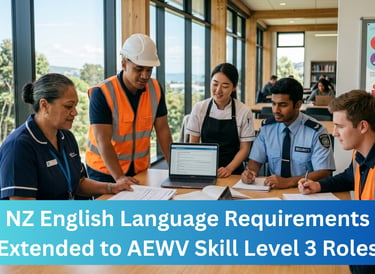
In a significant policy shift aimed at strengthening the integrity of the New Zealand migration system, Immigration New Zealand (INZ) has announced that minimum English language requirements will be extended to Accredited Employer Work Visa (AEWV) applicants in ANZSCO and NOL (National Occupation List) skill level 3 roles.
This rule change comes into effect on 1 June 2026.
If you are a New Zealand employer recruiting for skill level 3 roles, or a migrant worker currently holding or planning to apply for a skill level 3 AEWV, it is vital to understand how these new regulations will affect your journey.
Below, our team at Silverstone Immigration breaks down everything you need to know about this policy update, the transitional arrangements in place, and what it means for your upcoming applications.
What is Changing?
Previously, minimum English language requirements only applied to migrants applying for an AEWV in ANZSCO/NOL skill level 4 and 5 occupations.
Beginning 1 June 2026, this requirement is expanding. Anyone applying for an AEWV for an occupation classified under ANZSCO or NOL Skill Level 3 must now demonstrate a minimum standard of spoken and written English.
How Can Migrants Meet the English Requirement?
Migrant workers can satisfy the English language criteria through a few established pathways:
Citizenship: Holding citizenship from specific English-speaking countries.
Work and Study History: Having spent a designated period studying or working in an English-speaking environment (under specific INZ criteria).
English Language Tests: Achieving a passing score on an approved English language test (such as IELTS, PTE Academic, TOEFL iBT, etc.).
Why is the Government Introducing This?
According to Immigration New Zealand, extending these rules to skill level 3 roles is designed to:
Support Better Integration: Ensuring migrants can confidently communicate in their workplaces and local communities.
Protect Migrant Rights: Helping workers fully understand their employment agreements, health and safety obligations, and basic worker rights in New Zealand.
Prevent Exploitation: Empowering migrants to recognize and voice concerns regarding non-compliant employers or unfair working conditions.
Key Exemptions & Transitional Arrangements
To ensure fairness for those already in the country and contributing to New Zealand's workforce, INZ has introduced a series of targeted transitional arrangements.
1. Retrospective Protection
No one with a current, valid AEWV will be retrospectively affected. Your existing visa remains fully valid under its original conditions until its expiry date.
2. The 1 December 2026 Expiry Rule
If you currently hold an AEWV that expires on or before 1 December 2026, you will be exempt from the new English language requirement when applying for a further AEWV at skill level 3. This gives short-term visa holders ample warning and time to prepare for future tests if they plan to stay long-term.
3. Prior Proof Exemption
If you have already provided sufficient evidence of your English language capabilities to INZ during a previous AEWV application, you will not need to provide it again.
4. Specific Visa Categories
The new English requirement does not apply to:
Job Change applications (for migrants already on an AEWV shifting to a new employer).
Global Workforce Seasonal Visas and Peak Seasonal Visas.
Crucial Timeline Warning for Employers and Migrants
A critical detail for employers to note relates to the Job Check process.
Even if an employer applied for and received an approved Job Check token before 1 June 2026, any migrant who submits their subsequent AEWV application on or after 1 June 2026 for a skill level 3 role must meet the new English language requirements.
Because of this, timing is absolutely critical. If you have prospective employees preparing their applications, they must submit them before June 1st to fall under the old rules, or begin preparing for an English test immediately.
What Should Employers Do Now?
If you rely on overseas talent for skill level 3 roles (which includes many specialized trades, technicians, and administrative roles), you should:
Audit your recruitment pipeline: Check the ANZSCO skill level of the roles you are hiring for.
Communicate with candidates early: Inform prospective skill level 3 hires about the English requirements so they can book test dates well in advance.
Plan for longer lead times: Booking, sitting, and receiving results for English tests can add weeks to the recruitment timeframe.
How Silverstone Immigration Can Help
Navigating sudden policy changes can be stressful and disruptive to business operations or personal career plans. At Silverstone Immigration, we specialize in managing complex visa pathways and keeping our clients ahead of regulatory shifts.
Whether you are an employer needing to restructure your recruitment timeline or a migrant worker unsure if your role falls under Skill Level 3, we are here to guide you. We can help verify your job's ANZSCO classification, analyze your eligibility for exemptions, and ensure your next application is seamless and fully compliant.
Don’t wait for the June 1st deadline to disrupt your plans. Contact the team at Silverstone Immigration today for a professional consultation.
Disclaimer The information provided in this article is for general informational purposes only and does not constitute formal legal or immigration advice. For advice tailored to your specific situation, please consult a Licensed Immigration Adviser.
Consultancy
Expert guidance for all NZ immigration matters.
Support
Services
© 2024–2026 Silverstone Immigration Services Ltd. All rights reserved.