
Major Changes to New Zealand Study Pathways (Effective 2026): What International Students Need to Know
New Zealand is introducing a series of immigration and education policy updates that will significantly improve the study-to-work-to-residence pathway for international students.
IMMIGRATION NEW ZEALAND UPDATE
Source - INZ
3/12/20263 min read

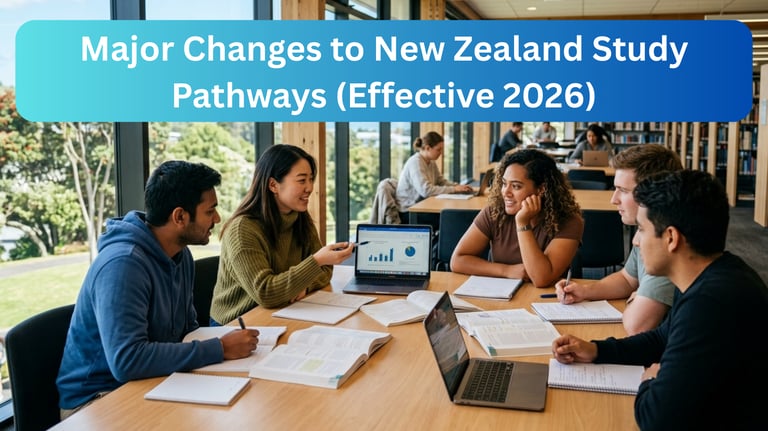
Several announcements from Immigration New Zealand outline key changes that will take effect from late 2025 through August 2026. These changes focus on three main areas:
Student visa work rights
Post-study work visa eligibility
Skilled residence pathways through the Skilled Migrant Category (SMC)
Together, these reforms aim to make New Zealand more competitive globally for international students while helping employers retain skilled graduates.
Here is a breakdown of the most important changes and how they benefit students planning to study in New Zealand from 2026 onwards.
1. Increased Work Rights During Study
One of the most immediate benefits for international students is an increase in part-time work rights.
From 3 November 2025, eligible students will be able to work:
Up to 25 hours per week during the semester
Previously, the limit was 20 hours per week
Why this matters for students:
This change gives students:
More financial support during studies
Greater exposure to the New Zealand labour market
Opportunities to gain relevant work experience while studying
Students will still be able to work full-time during scheduled breaks, which remains unchanged.
Another important change is that students on approved exchange or study-abroad programmes will also become eligible for in-study work rights, even if their programme is only one semester long.
Practical benefit
For many students, working an extra 5 hours per week can mean:
covering part of living costs
gaining industry exposure earlier
building networks that may lead to future employment.
2. New and Expanded Post-Study Work Visa Options
The Post-Study Work Visa (PSWV) remains a key part of New Zealand’s international education strategy.
This visa allows graduates to remain in New Zealand and work for up to 3 years depending on the qualification completed.
Key benefits of the Post-Study Work Visa
Graduates can:
Work for any employer if they completed a degree Level 7 or above
Gain skilled work experience required for residency
Support family visas (partner work visa and children’s student visas)
Important update from late 2026
Eligibility for the PSWV will be expanded.
Students who complete a Level 7 Graduate Diploma in New Zealand will be able to qualify for a PSWV if they also hold a Bachelor’s degree (from NZ or overseas).
Why this is significant
This change opens more flexible study pathways, especially for students who:
already hold a bachelor’s degree overseas
want to complete a shorter graduate diploma in New Zealand
still obtain post-study work rights.
It allows students to upskill quickly and still qualify for work experience in New Zealand.
3. Improved Skilled Migrant Category (SMC) Pathways
New Zealand is also updating the Skilled Migrant Category Resident Visa to strengthen residence pathways for skilled migrants and graduates.
The new rules will come into effect from August 2026.
Key improvements include:
Reduced New Zealand work experience requirements
Previously migrants could require up to 3 years of skilled work experience to reach the required points.
Under the new settings, the maximum will reduce to 2 years.
This means graduates may be able to qualify for residence faster after securing skilled employment.
Additional points for New Zealand qualifications
Another major policy shift is that qualifications completed in New Zealand will receive additional recognition under the points system.
Applicants will receive one extra point for a qualification completed in New Zealand compared with the same qualification obtained overseas.
Why this benefits international students
It means studying in New Zealand will directly strengthen an applicant’s residence eligibility, giving international graduates a competitive advantage in the Skilled Migrant Category.
4. New Residence Pathways for Skilled Workers
The government is also introducing two new residence pathways under the Skilled Migrant Category from August 2026.
Skilled Work Experience Pathway
For migrants who:
Work in skilled occupations (skill level 1–3)
Have at least 5 years relevant experience
Include 2 years of work experience in New Zealand
Trades and Technician Pathway
For workers in specified technical occupations who:
Have a Level 4 or higher qualification
Have 4 years relevant experience
Include at least 18 months working in New Zealand
These pathways recognise the value of practical skills and industry experience, not just academic qualifications.
5. Stronger Alignment Between Study and Residence Pathways
These reforms form part of the Government’s strategy to strengthen the international education sector and retain skilled graduates.
The policy direction aims to:
Attract high-quality international students
Help graduates transition into skilled jobs
Retain talent needed by New Zealand’s economy.
For students planning to study in New Zealand from 2026 onwards, the pathway will typically look like this:
1️⃣ Study in New Zealand
2️⃣ Work part-time (up to 25 hours weekly)
3️⃣ Apply for a Post-Study Work Visa
4️⃣ Gain skilled employment
5️⃣ Apply for residence through Skilled Migrant Category
What This Means for Future International Students
These updates significantly strengthen New Zealand’s position as a destination for international students.
Key advantages now include:
More work hours during study
Expanded Post-Study Work Visa eligibility
Faster pathways to residence
Additional points for NZ qualifications
New residence pathways recognising technical and trade skills
For students looking to build a long-term career and migration pathway, New Zealand remains one of the few countries where education can still realistically lead to permanent residence.
Final Thoughts
The upcoming changes from late 2025 to August 2026 demonstrate New Zealand’s commitment to supporting international students while addressing labour shortages across the economy.
For students planning their education journey, choosing the right course, qualification level, and career pathway will be more important than ever.
Professional immigration guidance can help ensure that your study choice aligns with post-study work opportunities and future residence pathways.
Consultancy
Expert guidance for all NZ immigration matters.
Support
Services
© 2024–2026 Silverstone Immigration Services Ltd. All rights reserved.